Catastrophic Earthquake in Asia: Terrifying 7.8 magnitude tremor in the Philippines, multiple buildings collapsed, high tsunami alert across the entire region including Japan and Indonesia, evacuation of hundreds of thousands of people to higher ground.
Natural Disasters and Global Security Desk: Emergency Live Report
Monday, June 8, 2026
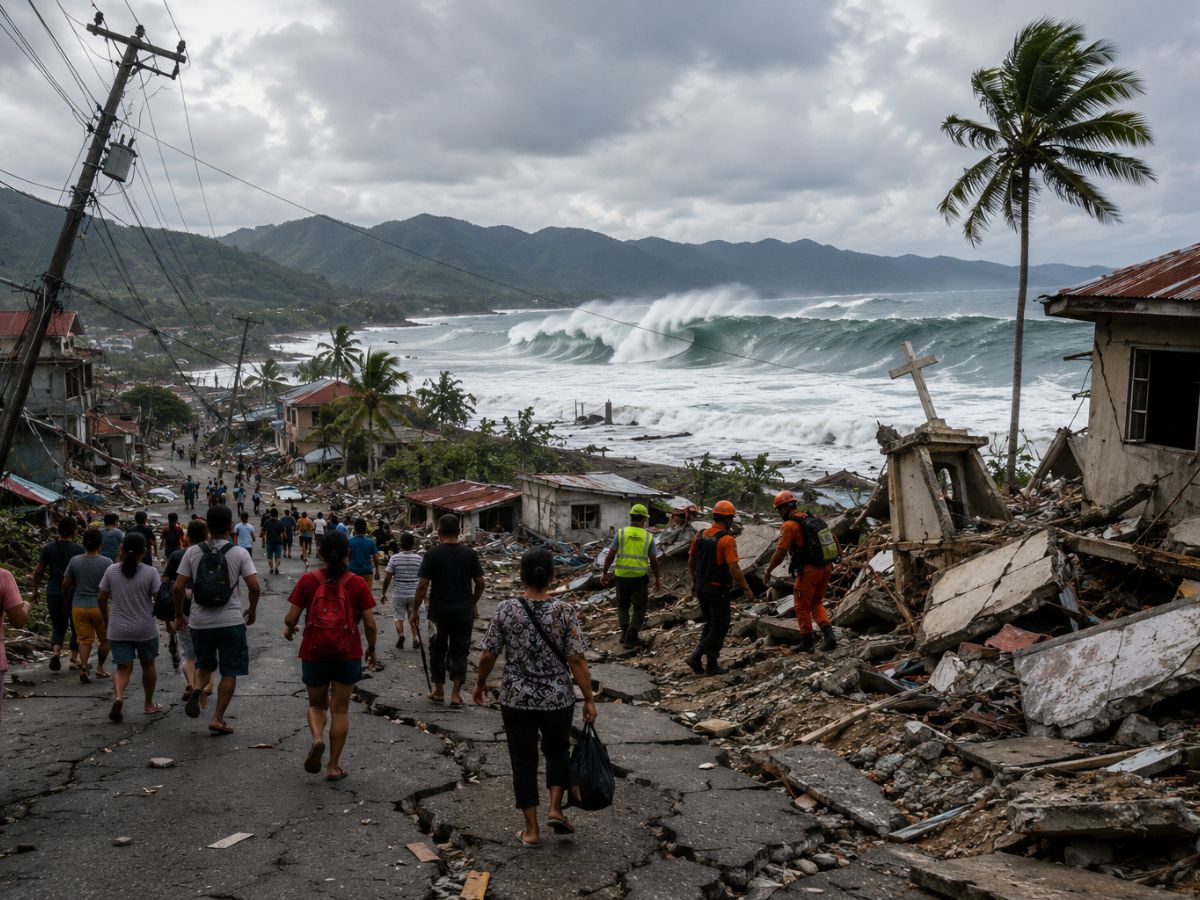
The Southeast Asia and Pacific region is currently under the grip of a terrifying and large-scale devastating natural disaster. On Monday morning, the southern Philippine island of Mindanao was shaken by such a severe and powerful earthquake that it turned thriving settlements into heaps of rubble within a few seconds. The intensity of the earthquake was so horrific that as soon as its tremors were felt, panic spread across the coastal countries of Asia, and the Pacific Tsunami Warning Centers immediately issued a high alert for dangerous tsunami waves for several countries, including the Philippines, Indonesia, Taiwan, and Japan.
According to verified reports from various global scientific institutions and seismological authorities, unusual changes are being observed in the sea level following this catastrophic earthquake, and orders have been issued for hundreds of thousands of coastal residents to urgently move to hilly and elevated locations.
1. Verified Scientific Details of Earthquake Scale and Time
According to the United States Geological Survey (USGS) and international seismological centers, this earthquake struck on Monday morning exactly at 7:40 AM local time (23:40 Greenwich Mean Time on Sunday night).
Final Estimate of Earthquake Intensity
The US National Tsunami Warning Center initially estimated the magnitude of this earthquake at 8.2, which is considered an extremely catastrophic earthquake. However, after later meticulous examination of scientific data, its final magnitude was recorded at 7.8. An earthquake of 7.8 magnitude also possesses enough energy to flatten major cities in seconds. The epicenter of the earthquake was the southern Philippine island of Mindanao, which is located on the 'Ring of Fire', the world's most dangerous zone in terms of earthquakes.
Endless Series of Aftershocks
According to the Philippine official agency 'Philippine Institute of Volcanology and Seismology' (PHIVOLCS), a continuous and severe series of aftershocks continued for more than an hour after the first major tremor of the earthquake. Due to these aftershocks, buildings that were partially saved in the first tremor also reached the brink of collapse, causing severe difficulties for rescue teams trying to enter the affected areas.
2. Live Scenes of Destruction in Mindanao and General Santos City
Immediately after the earthquake, heart-wrenching scenes of destruction emerged on Philippine social media and local TV channels, leaving the world stunned.
Collapse of a Three-Story Building
In a verified and horrific video going viral on social media, a three-story building comprising a famous 'Jollibee Restaurant' in the densely populated city of General Santos, Mindanao, can be seen collapsing like a deck of cards within seconds. As soon as the building fell, dust clouds and a storm of debris rose all around, and onlookers and passersby present there started running here and there, screaming and shouting to save their lives.
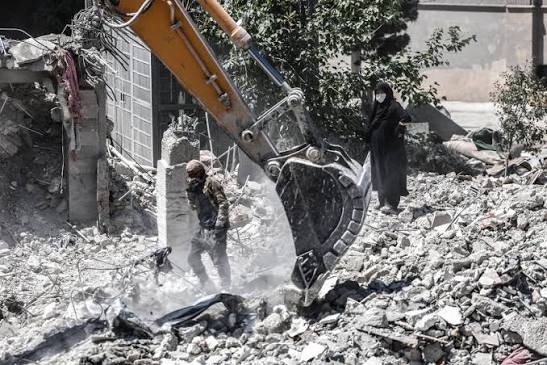
In pictures coming from other areas, the infrastructure of the cities appears completely destroyed. Large glass windows of major commercial buildings have broken and fallen onto the streets, roofs of houses have blown away, deep cracks have appeared in the middle of roads, and the electricity and communication systems have become completely paralyzed.
Eyewitness Account: Roads and Trees Began to Sway
Sister Mary Ann Blanco Roddy, a Catholic nun serving Notre Dame of Dadiangas University located in General Santos City, described this catastrophic scene to Al Jazeera News Network as follows:
"I was going towards the college in the morning when suddenly the ground started shaking as if someone was violently jerking a vehicle. Cars running on the road were moving erratically toward each other; thank God they narrowly escaped colliding with each other. Large trees planted on the roadside were swaying violently as if a storm had come. I have never seen such a terrifying earthquake in my life. Several buildings of our college have also partially collapsed, and there is an atmosphere of chaos everywhere."
3. Presidential Decree and Emergency Alert: "Do not wait, go to high ground now"
In view of the horror of the earthquake and the increasing danger of a tsunami, Philippine President Ferdinand Marcos issued an emergency message to the nation on Monday morning. He immediately activated the Office of Civil Defense and the 'National Disaster Risk Reduction and Management Council' (NDRRMC) on high alert.
Presidential Warning to the Nation
President Marcos appealed to the citizens living in coastal areas in extremely emotional and harsh words:
"My heartfelt appeal to all our citizens (kababayans) living in the affected provinces is that they should not take the official tsunami warning as a joke or a minor matter. Do not wait for anything, leave your homes and belongings and move toward hills and high places right now. The safety of your life and your soul is more important than any material thing left behind."
Following the President's orders, educational institutions, schools, colleges, and government offices have been immediately closed across all provinces of Mindanao, and all resources have been dedicated to the safe evacuation of people.
4. Tsunami High Alert Across Asia: Wave Heights and Timings
The Pacific Tsunami Warning Center (PTWC), after analyzing hydrographic data, has warned that the waves generated inside the sea as a result of this earthquake can take a devastating form.
Estimated Potential Wave Heights
Philippines: The first and most dangerous tsunami waves can be up to 3 meters (about 10 feet) high, which will hit the coastal provinces of the Philippines severely.
Indonesia and Malaysia: The wave height in the nearby coastal areas of these countries is expected to remain up to 1 meter (3.3 feet), which is enough to wash away coastal settlements.
5. Emergency Measures by Japan, Indonesia, and Other Islands
Since the earthquake was near the central zone of the Pacific Ocean, its impact was not limited to the Philippines alone, but all surrounding islands and countries activated their security defense systems.
Philippines Orders Evacuation of 9 Provinces
Philippine authorities have ordered all citizens of nine strategic coastal provinces of the country, including Sarangani, Davao Occidental, Tawi-Tawi, and Sulu, to move inland or to the mountains immediately. PHIVOLCS has issued guidelines for boats present in the sea, stating that boats that are at ports should immediately go toward deep water, because tsunami waves near the coast smash and destroy boats.
Indonesia's Urgent Evacuation Order
The government of Indonesia has also declared a state of emergency and issued strict instructions to the coastal residents of its northern regions, especially North Sulawesi, North Gorontalo province, and Sangihe Islands, to immediately vacate their homes and move to elevated places.
Japan's Warning and US Position
The Japan Meteorological Agency (JMA) has issued a formal tsunami alert for its remote islands including Okinawa and the entire southern coastline of the country. On the other hand, the US National Tsunami Warning Center stated in a clarifying statement that there is no threat from this earthquake to the western coasts of the United States or the Hawaiian Islands. Although Guam and the Northern Mariana Islands have canceled their initial warnings, mariners there have also been told to remain alert due to strong ocean currents.
Final casualty data resulting from this earthquake has not yet emerged as several remote areas are cut off due to being buried under rubble and communication systems being down; however, the Philippine military and civil defense teams have started large-scale rescue operations.