For God's sake! Just think. Is this a presence before Allah, or a haste to finish some chore? The heart aches to see that the prayer (Namaz) which was called the "Ascension (Me'raj) of the believer" is wrapped up in a few moments. Neither peace in standing (Qiyam), nor stillness in bowing (Ruku), nor weeping in prostration (Sajdah), and as for the Quran, the words are just rushed through and the prayer is done! Will this same disrespect work in the court of Allah? Reading the Holy Quran at such a speed that letters are swallowed, Tajweed is violated, and the meanings are disregarded—this is not worship, this is an injustice to the Quran. If Tarawih feels like a burden, it is better to leave such Tarawih than to strangle the worship. Allah does not want our speed, but rather our humbled heart. Bowing and prostration should not just be of the body, but of the heart as well. Otherwise, there is a fear that we might think the prayer has been offered, while in reality, nothing was offered at all. For God's sake! Do not turn Ramadan into a ritual. Do not turn prayer into a competition. Do not turn the Quran into a race. Standing before Allah is a privilege. Offer it with seriousness, respect, and the fear of Allah. Lest in our haste, we destroy our Hereafter instead of worshipping. May Allah grant us the appreciation of prayer, respect for the Quran, and the consciousness of worship. Ameen, O Lord of the Worlds!


ارے بھائی!

اگر آپ ہزاروں کتابیں، نعتیں، تصاویر، ویڈیوز، اخبار، مضامین، قبلہ نما، اوقات نماز، اسلامک گھڑی اور بہت کچھ آسانی کے ساتھ حاصل کرنا چاہتے ہیں تو بس ہمارے Islamic Tube ایپ کو پلے سٹور سے انسٹال کرو، اور بالکل مفت اور آسانی کے ساتھ اسلامک مواد حاصل کرو

ڈاؤن لوڈ کریں
Image 1

The Hidden Bond of Self-Respect and Empathy: The Story of a Shoe-Shiner and Two Friends

The Hidden Bond of Self-Respect and Empathy: The Story of a Shoe-Shiner and Two Friends

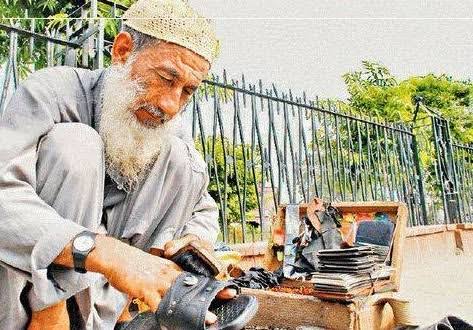
Getting his shoes polished by the old man sitting on the pavement near the office was a regular routine for him. However, a strange thing I had been noticing for the past several days was that every time after getting his shoes polished, he would argue with the old man, claiming the polish wasn't done right and demanding he do it again. Surprisingly, he would also pay the fee twice for the double polish, even though that hardworking elder shined the shoes perfectly the very first time. Upon my friend's objection, the old man would just smile faintly, polish the shoes again, and affectionately put them on his feet. Today, when I asked my friend the reason behind this act of his, he replied: "A person who earns through hard work at this age is highly self-respecting. In order to give him double compensation for his hard work, I falsely find fault so that I can help him out." I couldn't help but be deeply impressed by my friend's way of thinking... Today, on my way back from the office, I was alone. As I passed near the pavement, I saw the old man's elderly eyes searching for my friend alongside me. I turned back, went to him, and said: "Please polish my shoes today." While putting on the polished shoes, I extended a two-rupee coin from my pocket toward the old man. Looking at the coin, he said: "Son, I charge five rupees for polishing, not two!" I asked in surprise, "But you take two rupees from my friend every day for a single polish, even though he always objects to your hard work the first time!" The elder looked at me with a smile and replied: "I know your friend objects the first time so that he can get his shoes polished a second time, pay me a double wage, and help me out. That is why I only charge him half the wage the first time!" Hearing the old man's reply, I placed five rupees on his palm and looked into his eyes with a wonder-filled smile. Along with the sparkle of self-respect, the color of empathy was also prominent in them. Indeed, empathy is an unknown bond that is connected solely by the string of mutual feelings. ___________📝📝📝___________ Narrated. Selection: Islamic Tube Pro App