Economic and Political Desk: Special Analytical Report
Sunday, June 7, 2026
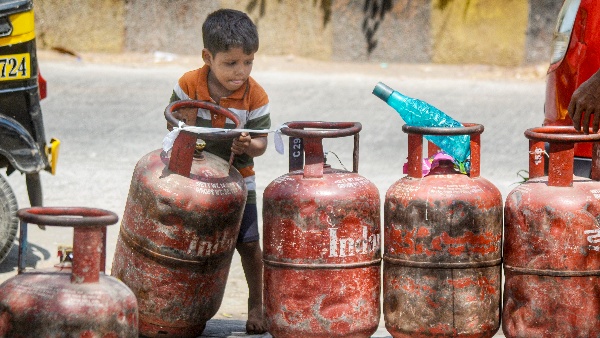
Another inflation bomb has been dropped on the poor and middle-class people of the country. After already pushing petrol and diesel prices to the sky, state-owned and private oil supply companies, with the silent consent of the Modi government, have once again heavily increased the rates of domestic and commercial LPG cylinders. Starting today, June 7, 2026, new cooking gas rates have come into effect across all small and big cities of the country.
This game of using fluctuations in crude oil and energy in the international market as a shield to benefit corporate companies and snatch subsidies away from common citizens has now taken a serious turn. The middle-class family, which was already crushing under electricity bills, children's school fees, and the high prices of food items, has now seen its kitchen budget completely destroyed.
1. Detailed Breakdown of Price Increase: What is the new rate in which city?
According to the latest notification issued by Oil Marketing Companies (OMCs), the price of a 14.2 kg domestic LPG cylinder has been increased by a lump sum of 29 rupees. Surprisingly, prior to this, on March 7, 2026, a major increase of 60 rupees was also made in the price of domestic cylinders. This means this is the second major burden on the public within just three months.
New rates of domestic cylinders in four major metros:
Delhi: In the capital Delhi, a domestic cylinder will now be available for 942 rupees instead of 913 rupees.
Kolkata: Citizens of Kolkata will now have to pay 968 rupees instead of 939 rupees for a cylinder.
Mumbai: In the financial capital Mumbai, the price has increased from 912.50 rupees to 941.50 rupees.
Chennai: In this major city of South India, the old price was 928.50 rupees, which has now increased to 957.50 rupees.
Condition of other major cities (Domestic Cylinder):
In other parts of the country, gas cylinder prices are touching or have crossed the psychological limit of one thousand rupees. In Patna, the domestic cylinder has now become 1,031.50 rupees, while its price has been fixed at 994 rupees in Hyderabad, 979.50 rupees in Lucknow, 968 rupees in Bhubaneswar, 951.50 rupees in Chandigarh, 945.50 rupees in Jaipur, and 939.50 rupees in Noida.
2. Fire in Commercial Cylinder Prices: Small businesses on the verge of ruin
The government has not targeted domestic consumers alone, but has also broken the back of small shopkeepers, hotel owners, tea stall vendors, and restaurant operators. A historic increase in the prices of 19 kg commercial cylinders has been witnessed since June 1.
In Delhi, the commercial cylinder has now become 3,113.50 rupees with an increase of 42 rupees.
In Kolkata, the price of the commercial cylinder has reached 3,255.50 rupees after an increase of 53.50 rupees.
In Patna, the price of the commercial cylinder has reached the highest, i.e., 3,400 rupees, while it is being sold at 3,367 rupees in Hyderabad and 3,067.50 rupees in Mumbai.
The price of the 5 kg FTL cylinder, used by poor daily wagers and students, has also been increased by 11 rupees, making its rate 821.50 rupees in Delhi.
These skyrocketing prices of commercial gas will directly affect the common man because food in hotels, tea, and other cooked items will become more expensive, which will trigger a new storm of inflation in the market.
3. Excuse of Government Companies and the Game of Corporate Favoritism
The stance of oil supply companies is that they were forced to make this increase because energy supply was affected due to the crisis in the Middle East (US-Iran confrontation and Israel-Lebanon tension) in the international market. The companies claimed that they were suffering a heavy financial loss (Under-recovery) of 703 rupees on the sale of every domestic cylinder, making this step inevitable.
Capitalist System and Exploitation of the Public
But economic analysts completely reject this excuse. The reality is that when crude oil and gas prices drop to record low levels in the international market, the government and these oil companies never pass that benefit to the common public. On the contrary, by buying cheap gas and oil, corporate companies increase their profit margins, and the government fills its treasury by increasing taxes. But as soon as there is a slight surge in the global market, its entire burden is immediately shifted onto the public. This is a blatant example of corporate favoritism and the worst form of a capitalist system where the public is considered merely a 'tax-paying machine'.
4. Failure and Economic Mismanagement of the Modi Government Laid Bare
This continuous increase in LPG prices is living proof of the failure of the economic policies of the current central government. The government's claim that it is making the country a "Vishwaguru" and a 5-trillion-dollar economy has remained a mockery for the poor class on the ground.
A) Funeral of 'Ujjwala Yojana'
The government had launched the 'Pradhan Mantri Ujjwala Yojana' (PMUY) with great pomp and show and advertisements worth crores of rupees, aiming to liberate poor women from the smoke of firewood and coal by providing them LPG cylinders. But what is the reality today? By pushing the price of the gas cylinder past 950 and 1000 rupees, the government has snatched away the affordability of buying gas from the poor. In rural areas, crores of women have put the cylinders away in corners due to them becoming expensive and are forced to light the stove again. This is a complete and clear failure of a major flagship scheme of the government.
B) Abolition of Subsidy and Deception with the Public
In the past, a reasonable subsidy was given to consumers on domestic gas, which lightened the burden of a common family. The current government has gradually, without any formal announcement, reduced the subsidy for the poor and middle class to almost zero. Now, only a few rupees come into the bank accounts of consumers in the name of subsidy, which is like a drop in the ocean. Snatched away of this basic right from the public, the government is now putting the burden of its economic incompetence on their shoulders as well.
5. Ongoing Corruption and Mafia Raj in the Fuel Department and Oil Companies
Behind this entire game of oil and gas is not just the situation of the global market, but also the nexus of corruption and bureaucracy spread within the country's internal system.
A) Black Marketing and Commercial Use of Domestic Gas
Due to the price of the commercial cylinder exceeding 3100 rupees, a huge corruption network is operating in the market. With the collusion of gas agency owners, supply mafias, and local inspectors, gas is extracted from domestic cylinders (which are cheaper) and refilled into large commercial cylinders, or domestic cylinders are illegally used in hotels and factories. Due to this black marketing, on one hand, common honest consumers do not get cylinders on time and have to face artificial scarcity, while on the other hand, through this mafia raj, bribes worth crores of rupees monthly reach the pockets of high officials.
B) Lavish Expenses of Companies and False Losses
The government oil companies (IOCL, BPCL, HPCL) that cry over losses have no checks on the lavish expenses, promotional campaigns, and wasteful expenditures of their high officials. The level of corruption is such that contracts for gas import and transportation are given to favored corporate friends at high prices, the commission of which is internally distributed among officials and political masters. The burden of this internal corruption and overpricing is ultimately recovered from the public by increasing the price of the gas cylinder.
6. Public Reaction and the Inertia of the Opposition
Following this increase in gas cylinder prices, public anger is boiling over on social media. People are saying that the government, which came to power by giving the slogan of "Acche Din", has snatched away even the morsel from the mouths of the poor. The public is asking why the leaders who used to dance on the streets with cylinders on their heads over a 400-rupee cylinder before 2014 are silent today when the cylinder has reached 950 rupees?
Political observers say that opposition parties in the country have also failed to launch any big and organized movement on this fundamental strategic issue of the public. Merely issuing statements does not affect the government. Unless a nationwide public movement is started against inflation and corruption, corporate companies and the government will continue to suck the blood of the public like this.
These new rates coming into effect from today are proof that the government has completely backed away from its constitutional duty of public welfare (Welfare State) and the country has been left at the mercy of the corporate mafia. If prices are not controlled immediately, more than half of the country's population will fall below the poverty line.