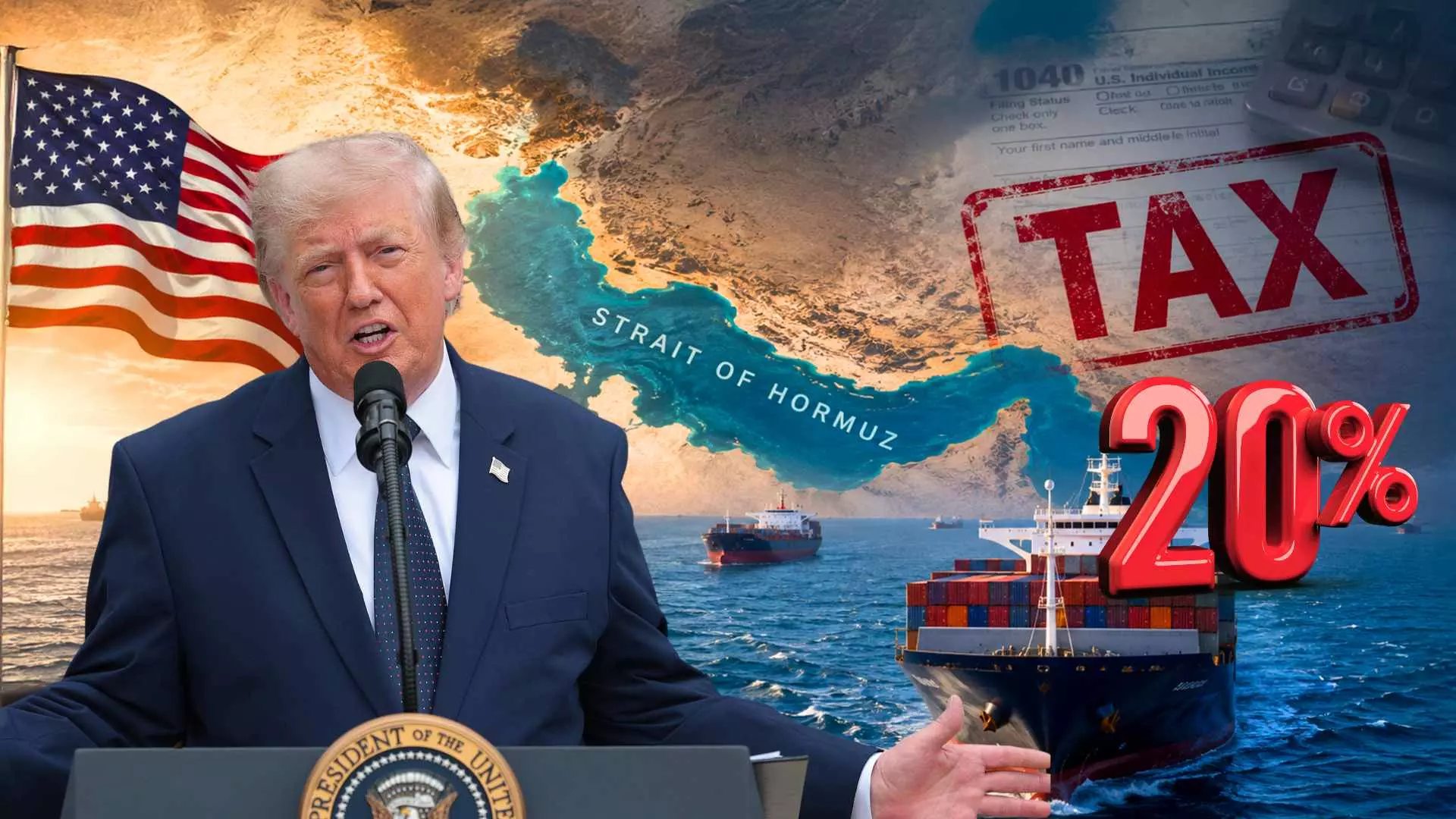
US President Donald Trump's recent announcement has caused a stir in global trade circles, particularly in the oil markets. He has decided to impose a 20 percent surcharge on all cargo ships passing through the highly crucial and strategic maritime route of the Strait of Hormuz. This unexpected decision has also sounded alarm bells for India, as a major portion of its energy needs depends on this route.
American Stance and Announcement of a Naval Blockade:
According to President Trump, this 20 percent tax will be collected as compensation for the expenses the US is incurring to secure this maritime passage. On Monday, he clarified that the US is going to resume the naval blockade of Iranian ports. This tax will apply to 'all other countries' except ships linked to Iran. Speaking to journalists at the White House, Trump emphasized that the US is keeping a strict watch on the situation and is taking control of the Strait of Hormuz. However, he also hinted that the doors for a peace agreement with Iran are still open. This series of sanctions will officially come into effect from Tuesday night at 8:00 PM (GMT).
Escalation in Tensions: Attack on UAE Ships:
Just hours before this announcement by Trump, the situation in the region became even more tense when the United Arab Emirates (UAE) claimed that two of its oil tankers, 'Mombasa' and 'Al Bahiya', were attacked by Iranian cruise missiles in Oman's territorial waters. In this tragic incident, one Indian crew member died, while 8 others were injured. The injured include 6 Indians and 2 Ukrainian citizens, 4 of whom are reported to be in critical condition. The UAE's Ministry of Defense termed this action an open violation of international laws and announced that it reserves the right to retaliate.
Iran's Strong Reaction:
An immediate and strong reaction has come from Iran regarding this move by the US President. Iranian Foreign Minister Abbas Araghchi stated in a message on 'X' that Tehran was and will remain the "Guardian" of this passage. He sarcastically agreed that whoever secures this waterway should receive compensation. On the other hand, the high command of the Iranian military issued a strict warning to the US, stating that they will absolutely not tolerate "American interference in the management" of this passage, and any cooperation associated with the US will be considered tantamount to an attack on Iran's sovereignty.
Is This Tax Legally Valid?
A spokesperson for the 'International Maritime Organization', a subsidiary of the United Nations (UN), told Reuters that there is no legal basis to impose such a mandatory toll or tax on ships passing through any international strait.
Potential Impacts on India:
This fresh situation is a cause of dual trouble for India:
Economic Impacts: Before the war intensified in February, approximately one-fifth of the world's oil and liquefied natural gas (LNG) passed through this very Strait of Hormuz. India heavily relies on this route for importing oil and gas from Gulf countries. Although India has recently turned towards Russian crude oil, the imposition of a 20 percent surcharge will significantly increase costs for Indian refineries, directly impacting the prices of petrol and diesel in the country.
Issue of Citizen Safety: The incidents of Indian citizens being killed and injured in recent attacks on commercial ships have raised question marks on the safety of Indian crew working in maritime territories. The number of Indians is very high among the crews of ships passing through the Gulf.
Currently, no official statement has been released by the Indian Ministry of External Affairs regarding this proposed cargo levy or the recent attacks. However, in the past, during such tense situations, the Government of India has issued advisories for the safety of its citizens.