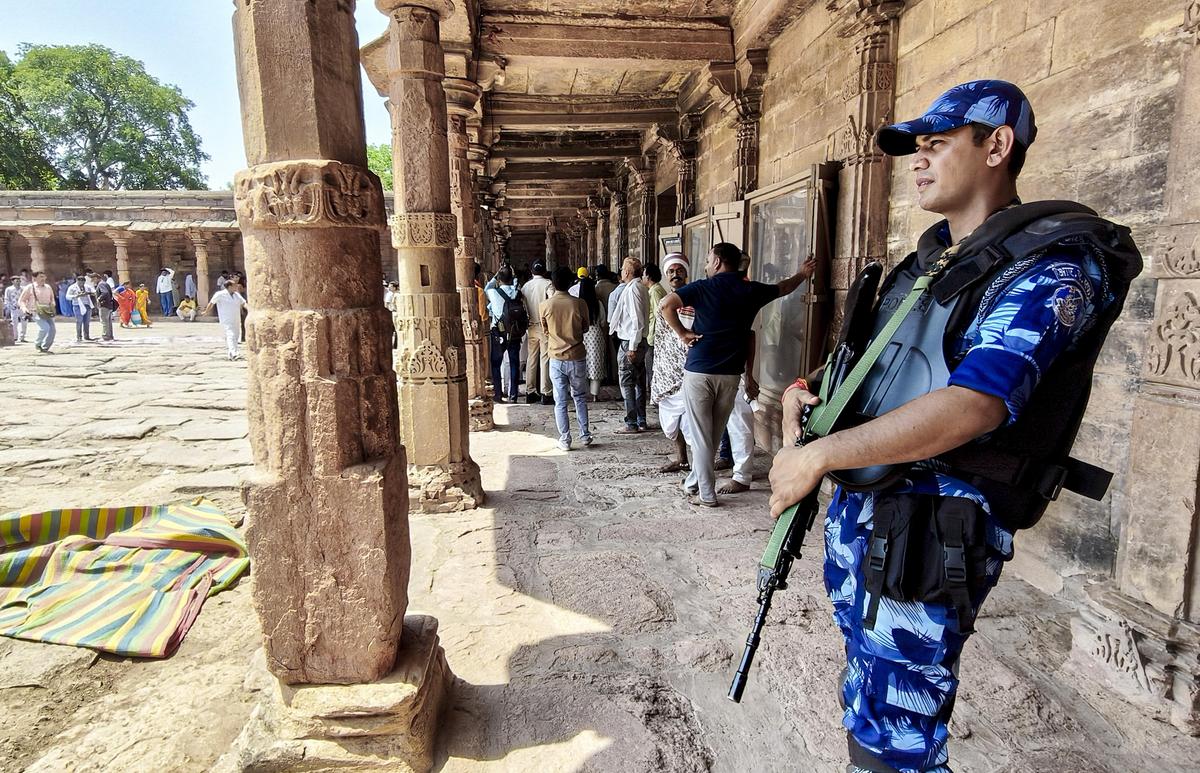
The recent Supreme Court order in the historic Bhojshala-Kamal Maula Mosque dispute in Dhar, Madhya Pradesh, has brought disappointment to the Muslim community. The apex court has refused to stay the High Court's decision granting the Hindu side the right to worship within the premises. This verdict has once again sparked a debate over 'double standards' regarding justice and religious freedom.
Main Points of the Decision and Their Impact:
Imbalance of Rights: On one hand, the Hindu side has been granted permission to worship inside the premises, while Muslims, who have considered this site their place of worship for centuries, have been given relief only under a 'temporary arrangement'.
Limited Space for Worship: The Muslim community has been permitted to offer Friday prayers (Jumma Namaz) not inside their mosque, but in an open space adjacent to the premises on Fridays (between 1 PM and 3 PM). This arrangement makes the community feel alienated from their own heritage.
Instructions to ASI: The court has directed the Archaeological Survey of India (ASI) that no structural changes should be made to the premises without the court's permission.
Double Standards of Society and System
In light of this decision, the anguish has also surfaced that the perspective on religious events differs in the country. When the majority community organizes grand and noisy events on streets or public places, it is deemed 'religious freedom' and 'celebration'. Conversely, if the Muslim community is compelled to offer prayers in open grounds or on roadsides out of necessity, it is often branded as a controversy and encroachment.
The Road Ahead and Hope for Justice
The Supreme Court has stated it will hold a detailed hearing on the Muslim side's appeal, but this judicial process is long. Until then, the Muslim community will remain away from their place of faith, relying solely on a temporary concession.
In a democracy, the scales of justice must be equal for everyone. It is hoped that the apex court will rectify this imbalance in its upcoming hearings and deliver a verdict that equally respects the faith and rights of every citizen, ensuring that no community feels like a second-class citizen in their own country.