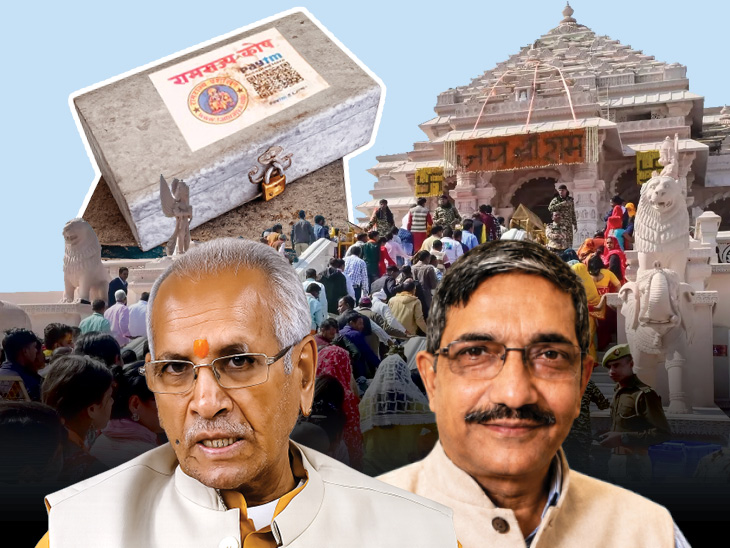
The issue of theft and corruption regarding the offerings at the Ayodhya Ram Mandir is not merely a matter of a temple's security system, but it raises several serious questions about our constitutional system, politics, and public conscience. A brief, clear, and effective analysis of this detailed article is given below:
1. This is not an ordinary temple theft, but an extraordinary case
No other temple in the country or the world is like this Ram Mandir. This temple was built after a historic Supreme Court verdict and the use of special powers under Article 142. For this, the public and saints of the country made voluntary donations of more than ₹3,000 crores.
According to the rules, the real owner of this property is 'Ramlala' himself (as a legal entity). The trust formed by the government is not the owner, but merely a manager. Therefore, the corruption in these offerings is a massive betrayal of the trust of the public and the government.
2. The conflation of 'Sin' vs 'Crime'
Dismissing this corruption as a 'sin' or 'great sin' is actually shielding the culprits and the State from their responsibilities.
Sin: This is related to God, morality, and conscience, the punishment or justice for which is decided in the next life or through karma. It can be washed away by atonement.
Crime: This is a violation of the country's law and the rules of the state. It is decided in courts and its punishment is meted out in this life.
Since corruption is a crime and every crime is considered 'against the state', every citizen has the right to raise their voice against it—regardless of their personal conduct.
3. Political helplessness of the opposition
Opposition parties have failed to corner the government and the Trust on this issue. As soon as they raise questions, they are declared 'anti-Ram'. Fearing this accusation, the opposition becomes defensive or seeks refuge in 'soft Hindutva'. Instead of standing firmly on the grounds of constitutional values and secularism, they fail to present their own arguments properly.
4. Contradiction of the ruling party and Sangh Parivar
The Sangh Parivar, which claims a '500-year struggle' over the Ram Mandir, is silent on this issue. There is a lack of diversity in the temple's Trust, and it is dominated by a specific class.
At the time of the consecration (Pran Pratishtha) on January 22, 2024, the Prime Minister and the Sangh Chief described it as the beginning of a 'new era' and 'self-pride', but today, when this internal dispute of the temple has come to the fore, they are completely silent.
5. Division among saints and folk tradition
There is no unanimous opinion among the sadhus and saints on this matter either. They too are divided into political camps and their personal interests. However, the folk tradition of Awadh has always been vocal against religious hypocrisy, where sayings like "Ram naam japna, paraya maal apna" (Chanting Ram's name, but usurping others' wealth) were coined to strike at exactly such hypocrites.
Conclusion: Conscience is greater than faith
Today, viewing this issue solely from a religious perspective would be a mistake. Saint Kabir had said—"Hari se tu mati het karu, kar Harijan se het" meaning instead of engaging in hypocrisy in the name of God, love humanity and society (Harijan). We need to view this entire sequence of events through the lens of our 'conscience' and 'constitutional awareness' rather than blind devotion, because today our perspective alone will determine the direction of our tomorrow.