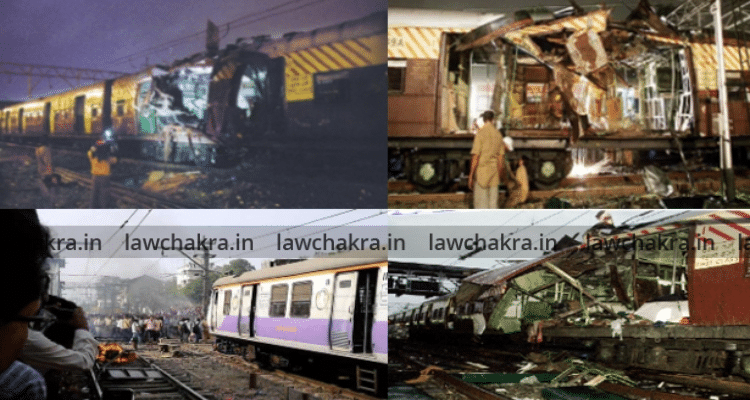
As the darkness of night fell over Mumbai’s railway stations, and the city was immersed in its daily hustle and bustle, the seven blasts that took place on July 11, 2006, not only shook the city but also pushed hundreds of innocent lives into the valley of death. These blasts claimed the lives of 189 people and injured 827 others. It was a night that left a deep wound in the heart of Mumbai. But even more painful than this tragedy is the story that began after it—a story in which innocent Muslims were trapped in a web of false accusations and their lives were thrown behind bars. The Bombay High Court delivered a historic verdict on July 21, 2025, acquitting all 12 accused in the case. These were the same accused who were sentenced to death and life imprisonment by a special MCOCA court in 2015. The court said in its ruling that the prosecution had completely failed to prove its case. No concrete evidence was presented, the nature of the explosives used in the explosions was not clarified, and the alleged motives of the accused were not explained. The confessions could be considered legally credible. The court also acknowledged that the accused were tortured after their arrest and that their confessions were obtained under duress and pressure. The identity parade was also found to be flawed, and the witness statements were found to be unreliable. The case, known as the 7/11 train bombings, is not only a story of tragedy but also a reflection of a system that repeatedly targets innocent people and destroys their lives. The accused—many of whom were arrested in their youth—have spent nearly two decades behind bars. One of them, Muhammad Faisal Sheikh, who was described as the alleged “mastermind” of the case, and the others who were accused of possessing the bombs, have all pleaded their innocence. The court heard their voices and tipped the scales of justice in their favor. This story is not just about these 12 individuals, but about a society that often sees through the lens of prejudice. The case against these accused was based primarily on their alleged confessional statements, which were recorded under the MCOCA Act. were made. But the defense lawyers—Yag Chaudhary, Nitya Ramakrishnan, and others—proved in court that these statements were the result of coercion, torture, and deception. One of the accused, Naveed Hussain Khan, told the court through video conferencing from Nagpur Central Jail that he was not involved in the case nor did he know the other accused before their arrest. He said that they had suffered for 19 years unnecessarily, and while people lost their lives in the blasts, it did not mean that innocent people should be hanged. The verdict is a great victory—not only for the 12 people but also for the justice system that has the ability to separate truth from lies. The defense lawyers said that the verdict will restore public faith in the judiciary. But with this victory, a question also arises: How will the years that these innocent people spent in jail be returned? What will become of that youth, that dream, that family that cried at their separation? This case once again reveals the bitter truth of how a certain class is targeted, falsely accused, and their Lives are destroyed. This story is not just about the Mumbai train blasts, but about the societal attitudes that crush innocents under the label of “terrorist.” But when an institution like the judiciary steps up to the cause of justice, a ray of hope is awakened—a ray that shows that truth always finds its way.